I've been telling guests the same John Ringling story for years, circus money, big mansion, art museum, causeway. It's all true, and I wrote about the highlights in an earlier post. But a couple weeks ago I fell down a research rabbit hole on him and came up with a handful of stories that never make the tour-guide version. Some are strange, one is genuinely sad, and one involves a gorilla.
I'm sharing them here the way I found them, plus, since I know a lot of you are planning trips right now, what's actually hanging on the walls at The Ringling this season, so you have a reason to go look for yourself.
The Ghost Hotel of Longboat Key

This is the one that got me. Long before he was Sarasota's favorite success story, Ringling and his business partner Owen Burns broke ground in 1926 on a Ritz-Carlton hotel at the southern tip of Longboat Key, the same stretch of island where a lot of our own guests stay today.
Then the Florida land boom collapsed, the Depression hit, and the money dried up. The hotel never got finished. For decades the skeleton just sat there, no roof on parts of it, trees and shrubs growing up through the floors, bats and owls nesting in the unfinished rooms. Locals called it the "ghost hotel." Vandals and curious trespassers wandered through it at night, and at least one person died falling from an upper floor. It stood like that, slowly being swallowed by the landscape, until 1964, when the Arvida Corporation finally tore it down to build what's now the Longboat Key Club.
Next time I drive past that stretch of the Key, I'm going to picture the version of it nobody built.
He Started as a Singing Clown

Before he was the sharpest businessman in the circus world, John Ringling's first job in the family show wasn't running anything, it was performing as the Dutch singing clown. He and his brothers had actually started out as traveling musicians (Ringling played bass viol), and only switched to circus acts when they noticed crowds liked tumbling better than tunes.
It's a strange image to square with the man in the tailored suits and the single understated ring, but I kind of love that the same guy who built a Venetian palace on Sarasota Bay started his career in greasepaint.
A Sharp Dresser Who Hated Flash
For someone who ran "The Greatest Show on Earth," Ringling was oddly restrained in person. His suits came from Fifth Avenue, his ties from Paris, but he wore a single ring, no more. His game of choice wasn't poker, it was bridge, played for hours and never for money. He smoked good cigars, but only ever finished half of one before starting a fresh one. When his massive art collection was finally revealed to the public, a 1928 art magazine wrote that he'd built it so quietly the news "comes like a bolt out of a clear sky." Not exactly the profile of a showman, except that, in its own way, that restraint was the show.
The Yacht Scandal
In 1922 Ringling bought a 125-foot yacht called the Zalophus. In February 1930, while he was out of town, his circus general manager borrowed it for a night out, and at 3 a.m. ran it aground near Lido Key, sinking it in twelve feet of water. The official statement said four passengers were aboard. It later came out that the guest list had been quietly trimmed for the press release, the real passengers included the mayor of New York and his actress girlfriend. A very Roaring Twenties way to sink a boat.
The Nephew Who Reinvented the Circus, and Got Forgotten
Here's the one most people, including me until recently, don't know at all: John Ringling had a nephew, John Ringling North, who ran the circus through its golden age in the 1940s and '50s, and arguably did more to shape it as an art form than his famous uncle.
North painted the tent a deep blue for dramatic lighting, brought in fifty showgirls for aerial ballets, and in 1942 commissioned Igor Stravinsky to write music for a ballet performed by fifty elephants, choreographed by George Balanchine. It's exactly as wonderfully absurd as it sounds, and it was a sensation.
He also brought Hollywood to Sarasota. In 1951, Cecil B. DeMille filmed The Greatest Show on Earth right here, six months of shooting at the Winter Quarters and on Main Street, with half the town as extras. It won the Oscar for Best Picture.
And then there was Gargantua. North acquired a 550-pound gorilla after a woman in Brooklyn called the circus asking if they wanted her ape, since he'd outgrown her house. Gargantua became a sensation, some circus historians credit him with single-handedly saving the show from bankruptcy during the lean years. North even found him a mate, M'Toto, whose custom-built house on Virginia Drive (shaped like the train car she traveled in) still stands in north Sarasota today.
Despite all that, there's no statue of John Ringling North anywhere in town. He sold the circus in 1967 and spent his last years in Europe, largely written out of the story his uncle gets all the credit for.
It Took 55 Years to Bury Him
This is the one that stuck with me. John and Mable Ringling wanted to be buried under the museum's statue of David, in the courtyard they built together. Instead, after Mable died in 1929 and John in 1936, their remains bounced between cemeteries in New Jersey and Port Charlotte for decades, tangled up in legal disputes. At one low point, they were reportedly at risk of ending up in a pauper's grave over unpaid storage fees.
They weren't finally laid to rest at the museum they built, behind the Secret Garden, alongside John's sister, until 1991. Fifty-five years after he died. The people who gave Sarasota its cultural identity had to wait half a century to actually rest in it.
What's Actually On Exhibit Right Now
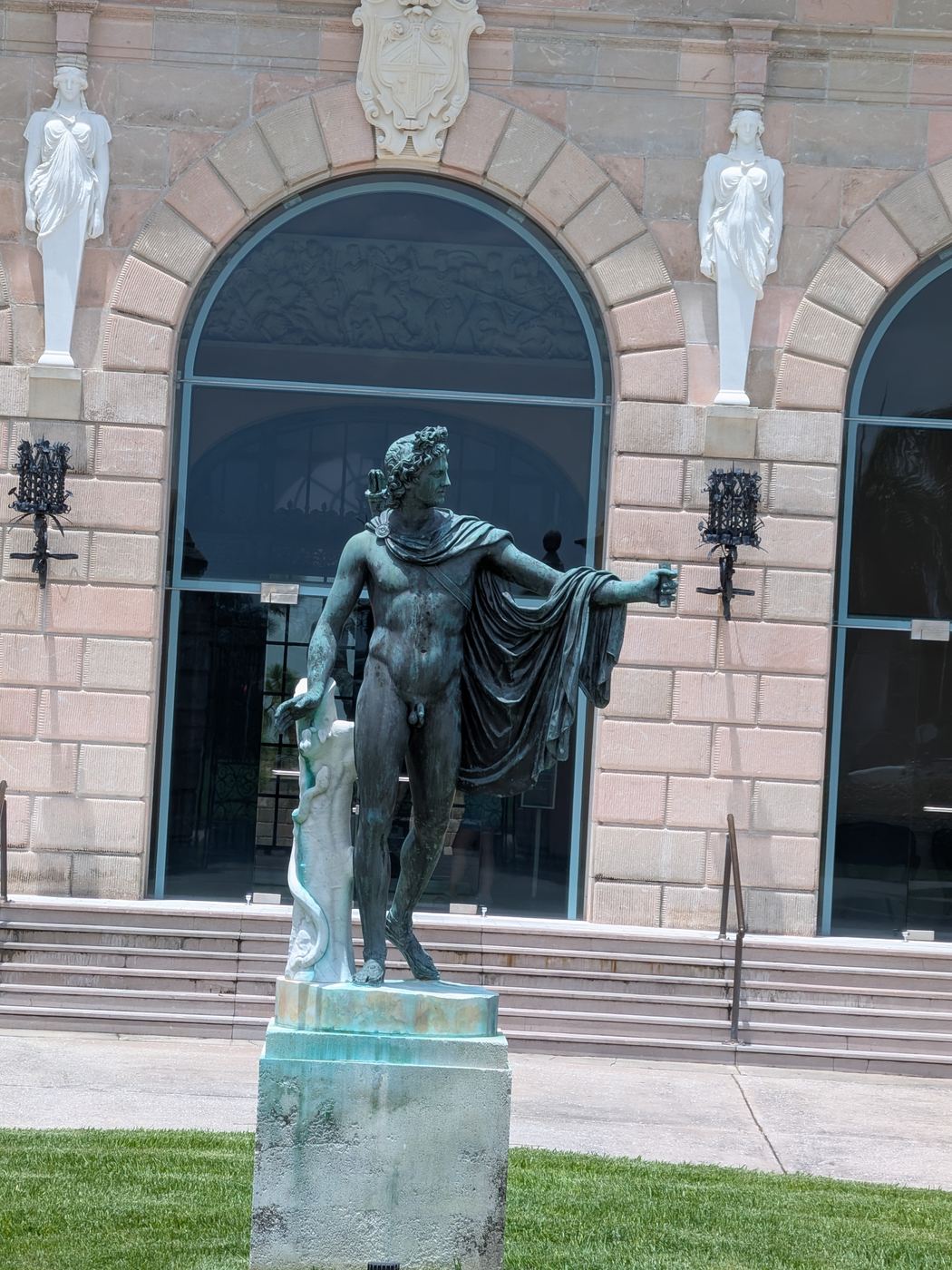
All right, enough ghost stories, if you're planning a visit, here's what's up at The Ringling this season, straight off their current listings:
Canvas City: The Materials of the Tented Circus (through January 3, 2027), a look at the actual materials and objects behind the old tented shows. Feels like the natural next stop after reading about North's blue big top.
The Art of Care: Conservation at The Ringling (through January 3, 2027), a rare behind-the-scenes look at how the museum's conservation team preserves its collection, with conservators sometimes working right in the gallery.
Ancient Art from Cyprus and the Mediterranean (Gallery 12, ongoing), this one's personal to the story: nearly all 201 objects on view were purchased by Ringling himself at auction back in 1928. You're looking at his own eye for collecting, not a later curator's.
Seventeenth-Century Dutch Paintings from the Museum of Fine Arts, Boston (through November 1, 2026), five loaned Dutch masterworks on long-term display in Gallery 10.
Exhibitions shift throughout the year, so it's worth checking ringling.org before you go, but any of these is a good excuse to spend an afternoon there this season.
Why I Went Looking
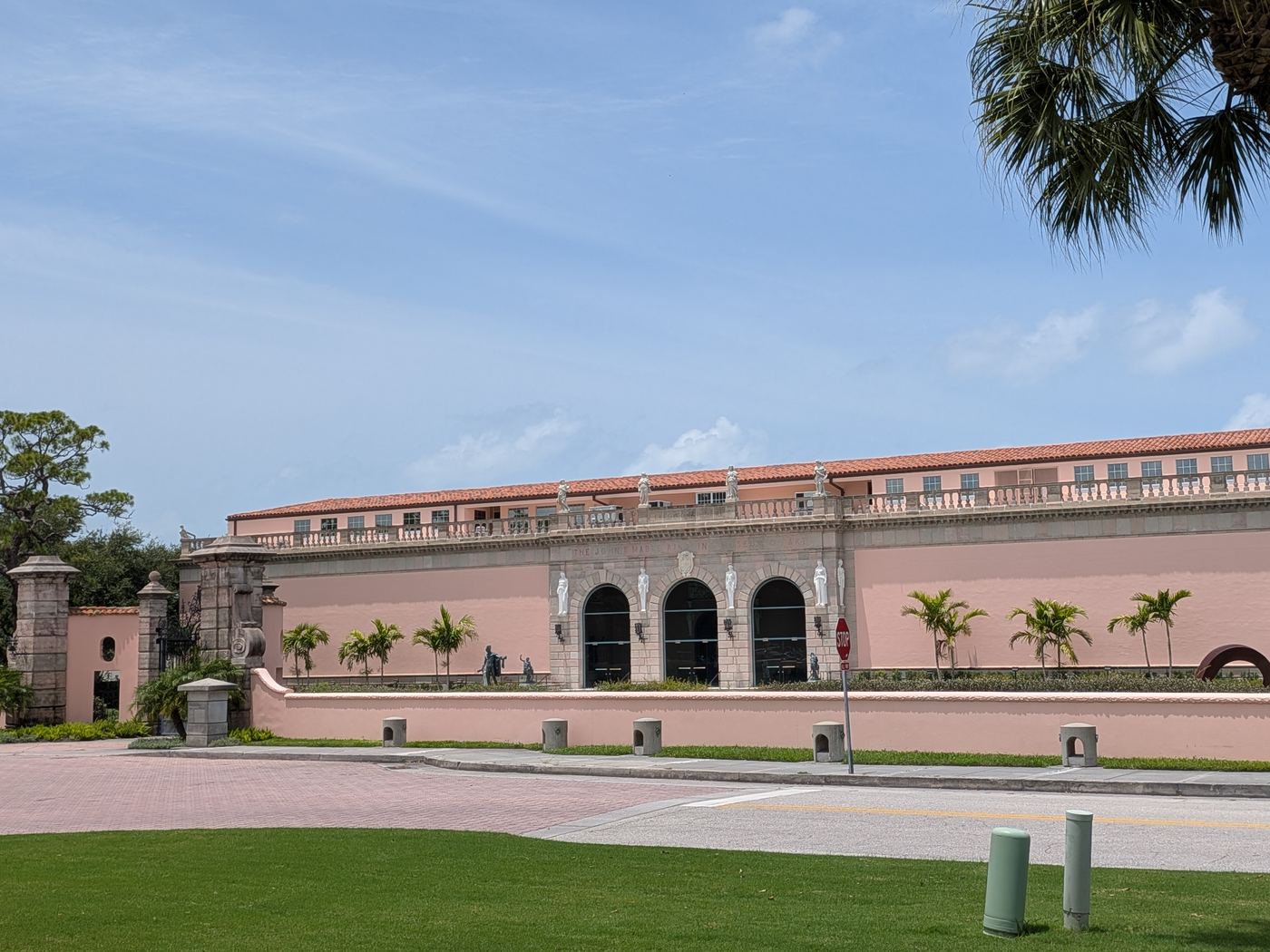
I manage vacation rentals up and down these islands, and I drive past pieces of this history more days than not without thinking twice about it. Digging into the parts that don't make the highlight reel, the ghost hotel, the forgotten nephew, the burial saga, made the whole place feel different to me. I hope it does the same for you next time you're out here.
If you're staying with us this season, The Ringling is an easy trip from any of our Longboat, Lido, or St. Armand's properties, go see the Cyprus gallery and picture him at that 1928 auction.